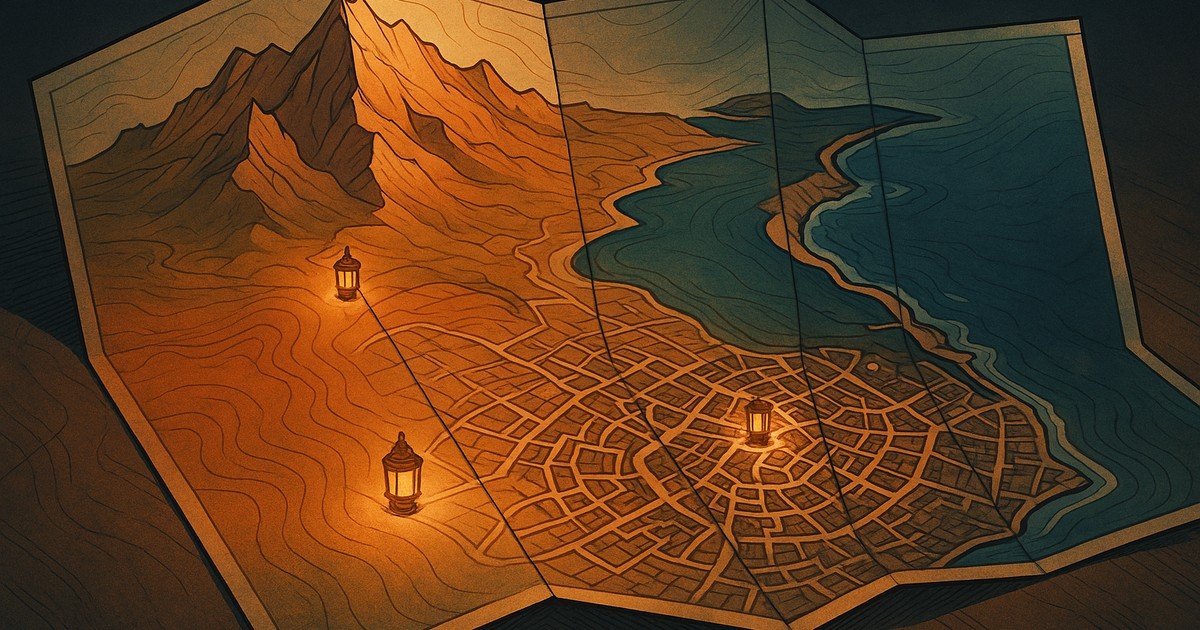
Every storyteller knows the silent struggle: you've got a brilliant world brewing in your mind, filled with epic sagas and unforgettable characters, but then you hit a wall. What do you call that ancient forest? That bustling port city? That alien moon colony? Naming isn't just about picking words; it's about crafting identity, evoking atmosphere, and rooting your audience in your narrative's geography and culture. This is precisely where procedural place name generators explained can become your most powerful ally, transforming a daunting task into a wellspring of creative inspiration.
These sophisticated tools aren't just spitting out random words; they're leveraging advanced algorithms and AI to produce names that sound authentic, culturally appropriate, and perfectly tailored to your imaginative setting. Whether you're a novelist, a game developer, or a dungeon master, understanding and utilizing these generators can drastically accelerate your worldbuilding process and elevate your creative output.
At a Glance: Key Takeaways on Procedural Place Name Generators
- Solve the Naming Block: Quickly generate authentic-sounding names for cities, landscapes, and realms, bypassing common creative hurdles.
- Powered by Logic: Utilize phonetic algorithms, cultural databases, and contextual AI to create names that feel real and fit your genre.
- Massive Time Savings: AI-driven generators have been shown to reduce worldbuilding time by 60%, allowing you to focus on story.
- Boost Consistency & Immersion: Generate names that trigger complementary visuals and lore, creating a cohesive and immersive experience for your audience.
- Adaptable for All Creators: Perfect for novelists, game developers, filmmakers, TTRPG players, and any creative needing to name elements within a fictional world.
- Beyond Basic Suggestions: Modern tools offer advanced features like visual integration, multi-style rendering, and custom model training.
- Commercial Use Friendly: Most generated names are free for commercial projects, though due diligence for trademarks is always wise.
The Unseen Power of a Name: Why Geography Matters
Before we dive into the "how," let's consider the "why." A well-chosen place name does more than label a spot on a map; it tells a story, hints at history, and sets a mood. Think about "Mordor" versus "The Shire" – each name instantly conjures a distinct image, emotional resonance, and cultural context. These are the anchors that ground your audience in your world.
Manually brainstorming hundreds of unique, consistent, and evocative names can be incredibly time-consuming, often leading to generic choices or "name fatigue." This is particularly true for large-scale projects like open-world games or expansive fantasy series, where you might need names for dozens of cities, countless villages, intricate mountain ranges, mysterious forests, and alien star systems.
What Exactly Are Procedural Place Name Generators?
At their core, procedural place name generators are software tools designed to automatically create fictional names based on predefined rules, algorithms, and sometimes, artificial intelligence. Unlike a simple random word generator, these tools are built with an understanding of linguistics, phonetics, and cultural naming conventions. They "generate" names in a "procedural" way, meaning they follow a set of steps or rules rather than pulling from a static list of pre-written names.
Early generators might have combined prefixes, suffixes, and root words from a limited database. Modern iterations, however, are far more sophisticated, employing techniques that mimic human language creation and even respond to contextual cues.
The Brains Behind the Names: How They Work
The magic behind these generators often boils down to a blend of several key technologies:
- Phonetic Algorithms: These algorithms understand how sounds combine in real languages to form pronounceable and authentic-sounding words. For instance, a generator might use rules for Celtic-sounding names, applying common prefixes like "Caer-" or ensuring specific vowel and consonant patterns that feel natural to that linguistic style.
- Cultural Databases: Many generators pull from vast databases of real-world toponyms (place names) or meticulously crafted fictional lexicons. This allows them to create names that feel grounded in specific cultural archetypes, whether it's a bustling medieval town, a sprawling elven kingdom, or a gritty cyberpunk district.
- Contextual AI: The latest generation of tools integrates artificial intelligence that can interpret your input and adjust names accordingly. Imagine asking for names for a "desert fortress" versus a "floating sky island." Contextual AI can select phonemes, moods, and even historical echoes that fit your specific description, enhancing the name's thematic resonance. A 2024 study, for example, highlighted how AI-generated names significantly reduced worldbuilding time by 60% and vastly improved audience immersion.
Most generators, like those found on The Story Shack, operate by default to create around 10 unique names per generation, with users often averaging 16 ideas per session. This rapid iteration allows you to explore many possibilities quickly.
Beyond the Basics: Advanced Features and AI Integration
The landscape of procedural name generation is rapidly evolving, especially with the surge in AI capabilities. What started as simple text output is now transforming into integrated creative pipelines.
The Rise of AI-Driven Worldbuilding
Modern tools, exemplified by platforms like Reelmind.ai, are pushing the boundaries. They integrate AI video and image synthesis directly with name generation, recognizing that names are not just text, but visual and narrative anchors.
Consider Reelmind AI Worldbuilder, which doesn't just give you "Sundered Wastes" but auto-generates a complementary desert scene to go with it. This kind of "AI Fusion" means you're not just naming; you're visualizing your world in real-time.
Key 2025 Updates and Capabilities for AI Generators:
- Generate Consistency: Names can trigger AI to design matching visuals and even lore snippets. Imagine naming "Azure Bastion" and instantly seeing a blue-hued fortress appear, complete with a short description of its history. This ensures a coherent aesthetic from the very first spark of an idea.
- Multi-Style Rendering: Test how your generated names appear across different visual styles – noir, anime, 3D render – allowing you to find the perfect artistic fit for your setting.
- Model Training & Customization: For those with specific visions, the ability to "train" a generator to output names fitting your unique universe rules is a game-changer. This means the AI learns your world's linguistic quirks and naming conventions.
- Video Sequences: Some tools can even turn a generated name into a 5-second establishing shot, instantly creating a mood board or even a rough cut for a trailer.
- Community Models: Share and utilize naming-style AI models crafted by other worldbuilders, expanding the collective creative toolkit.
Real-World Impact: The Nebula Realms Case Study
Indie game studio Nebula Realms leveraged an advanced AI generator to streamline their production. They generated over 200 planet names, auto-created concept art for each, and even exported video previews. The result? A 40% faster production cycle and significantly richer player feedback, demonstrating the tangible benefits of an integrated naming and visualization process. This kind of efficiency allows smaller teams to compete with larger studios.
Choosing Your Ideal Procedural Place Name Generator
With various tools available, how do you pick the right one for your project? Consider these factors:
Top 5 Types of Place Name Generators to Explore:
- General Worldbuilding Generators: Platforms like The Story Shack offer broad utility, producing authentic-sounding names suitable for various genres and cultures, from fantasy to sci-fi. They often allow saving ideas to browser local storage and copying names easily.
- AI-Integrated Worldbuilders (e.g., Reelmind AI Worldbuilder): If you need names and visuals, these are invaluable. They fuse naming with image editing for mood boards and even video sequences.
- Genre-Specific Generators (e.g., Watabou’s Fantasy Cities, Donjon’s Sci-Fi Generator): These are tailored for specific thematic needs, offering names that inherently fit medieval fantasy or futuristic colonies.
- Thematic & Niche Generators (e.g., Chaotic Shiny): For highly specific settings or obscure concepts, these can provide unique thematic names that align perfectly with your vision.
- Map-Integrated Tools (e.g., Inkarnate’s Map Tools): If your primary focus is cartography, these combine map creation with auto-naming features, populating your world as you draw it.
When exploring your options, remember to learn more about Place Generator Name and the various features they offer, which can greatly enhance your selection process.
Practical Considerations for Selection:
- Genre & Style: Does the generator support the aesthetic and linguistic feel of your world (e.g., high fantasy, grimdark, cyberpunk, space opera)?
- Feature Set: Do you just need names, or do you need integrated visuals, lore snippets, or map tools?
- Customization: Can you tweak parameters, seed words, or even train the AI to fit your unique naming rules?
- Usability: Is the interface intuitive? Can you easily save, copy, and manage your generated ideas? (Many, like The Story Shack, allow saving to browser local storage via a save icon and accessing them through a "saved ideas panel.")
- Cost: While many core name generation functionalities are free, premium themes or advanced features might require a subscription or supporter model.
- Database Updates: Look for tools that regularly update and expand their name databases, offering thousands of unique combinations.
Best Practices for Using Place Name Generators
Generating names is just the first step. Here's how to integrate these tools effectively into your creative workflow:
- Start with Your World's Core: Before generating, have a clear idea of your world's culture, technology level, and general mood. Is it an ancient, magical land or a gritty, dystopian future? This context will guide your choices and prompt selection.
- Iterate and Explore: Don't settle for the first few names. Generate multiple batches. Remember, users often generate 10 names at a time and average 16 ideas per session. The more you generate, the higher your chances of finding that perfect fit.
- Mix and Match: Sometimes a prefix from one name and a suffix from another create a brilliant combination. Don't be afraid to Frankenstein ideas.
- Refine and Personalize: A generated name is a fantastic starting point, but you can always tweak it slightly to make it uniquely yours. Change a letter, add an apostrophe, or combine it with a word from your constructed language.
- Consider Pronunciation: While names might look cool on paper, try saying them aloud. Ensure they're easy for your audience to pronounce (or enjoyably challenging, if that's your intent).
- Check for Unintended Meanings: A quick search can reveal if a generated name accidentally sounds like something silly or, worse, a real-world place or phrase that could cause confusion.
- Due Diligence for Commercial Projects: While most generators allow commercial use without credit, it's always wise to perform a quick trademark search, especially for prominent names in your work (e.g., your primary city or realm names). You want to ensure your unique "Azure Bastion" isn't already copyrighted.
- Organize Your Favorites: Utilize saving features (like the "saved ideas panel" in many generators) to keep track of names you like. Group them by category (cities, mountains, rivers) for easy reference.
Common Questions and Misconceptions
"Are these names truly unique?"
Generators pull from massive databases and algorithms, creating thousands of unique combinations. While it's theoretically possible for two people to generate the same name, especially with simpler generators, the vastness of the combinations makes it unlikely for key names. Advanced AI models, with their contextual understanding, further increase the distinctiveness. The Story Shack, for instance, boasts regularly updated databases with thousands of unique combinations.
"Will using a generator make my world feel less original?"
Quite the opposite! Generators free you from the mental strain of naming, allowing you to focus your creative energy on lore, character, and plot. They provide a springboard for originality, offering starting points you might not have conceived on your own. It's about empowering your creativity, not replacing it.
"Do I need to credit the generator?"
Most platforms, like The Story Shack, explicitly state that no credit is required for using the generated names, even for commercial projects like novels or games. However, always check the specific terms of service for the generator you're using.
"Can I make a generator learn my specific naming style?"
Yes, with advanced AI-driven tools like Reelmind's 2025 updates, you can train models to output names fitting your specific universe rules. This customization ensures that even procedurally generated names align perfectly with your unique vision.
The Future is Named: Evolving Your Worldbuilding
Procedural place name generators are more than just tools; they are evolving partners in the creative process. As AI continues to advance, we can expect even more intuitive, context-aware, and visually integrated generators. Imagine a tool that not only names your swamp but then designs its ecology, local flora, and even the sounds it might make.
For any creator serious about worldbuilding, embracing these generators isn't a shortcut; it's a strategic enhancement. It means less time agonizing over syllables and more time crafting the epic narratives that will transport your audience. By leveraging these powerful resources, you can ensure that every corner of your imagined world, from the grandest city to the smallest hamlet, has a name that resonates, inspires, and truly brings it to life.